


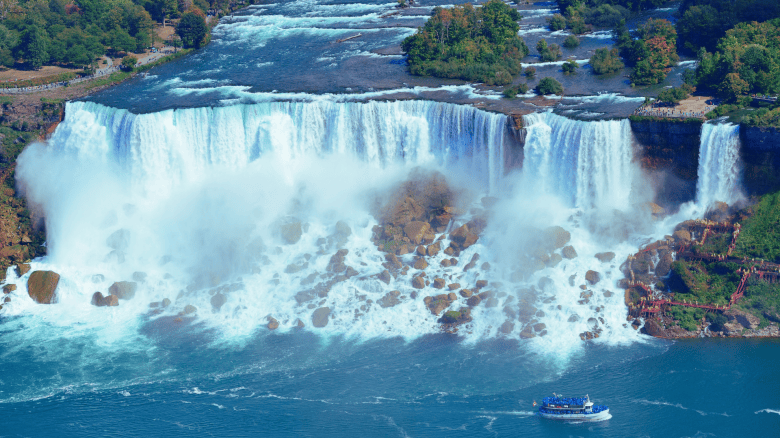
While Niagara Falls is famous as a majestic natural wonder, it now has less water flowing over its edges. A seemingly alarming state at first, it’s actually something that humans are responsible for and is done for a specific purpose.
The Change Is Related to Both Nature and Power
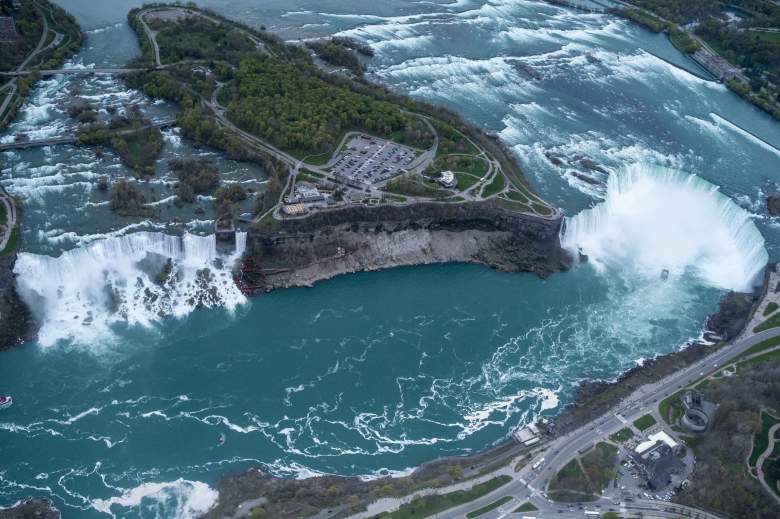
In a situation that will last until April 1, 2027, “the minimum amount of water required to flow over Niagara Falls was cut in half” on Sunday, Nov. 1, “dropping from 100,000 cubic feet per second to 50,000 cubic feet per second,” AccuWeather reported on Wednesday, Nov. 4. “That’s a decrease from roughly 748,000 gallons to 374,000 gallons every second.”
The change to the water flow is a measure taken to preserve the aesthetic of the falls while also managing the electricity that is generated by the river.

Managing both the flow of the falls along with using the river to generate electricity has been a joint effort by both the United States and Canada since 1950, which is when both countries who benefit from the area’s beauty and power signed a treaty to oversee water usage.
“During the winter, more water can be diverted away from Niagara Falls and toward hydroelectric power plants in New York and Ontario, where the rushing water is used to produce electricity,” AccuWeather explains.
Although this could be done at any time, there’s a good reason why it happens during the winter months.
More Water Can Be Diverted Away From the Falls During Winter Due to Tourists
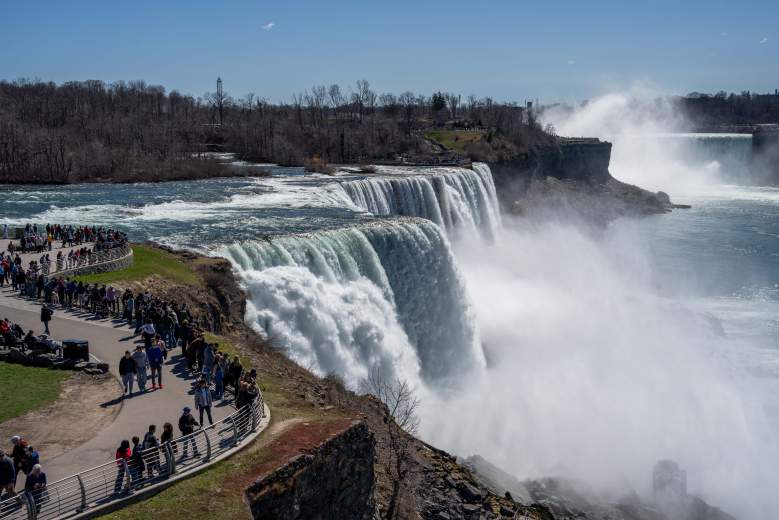
The reduced water flow over Niagara Falls taking place between November and April isn’t a random choice. It coincides with the slower tourist season.
“The rules governing Niagara Falls change with the seasons, requiring more water to flow over the waterfalls during the busiest months for tourism,” AccuWeather notes. “From April 1 through Oct. 31, at least 100,000 cubic feet per second must flow over the falls during the day and into the evening. Overnight, that minimum drops to 50,000 cubic feet per second. From Nov. 1 through March 31, the lower minimum applies around the clock.”
Although the exact amount of water can be affected by various factors such as weather, the higher flow during the warmer tourist season allows the falls to look their most impressive to the millions of visitors who head to the area to see the attraction each year.
Bringing in 8.91 million visitors to Niagara Falls State Park, NY, in 2025, that’s on top of the 12 million tourists who head to Niagara Falls, Ontario, each year, according to Road Genius. In total, both sides record around 21 million visits from tourists annually.
Niagara Falls Tourism notes that the busiest season for tourism is between July to September, while the second busiest is from April to June, which backs up the timing of the reduced water flow.












Niagara Falls Is Losing Half Its Water — And Humans Are Responsible