


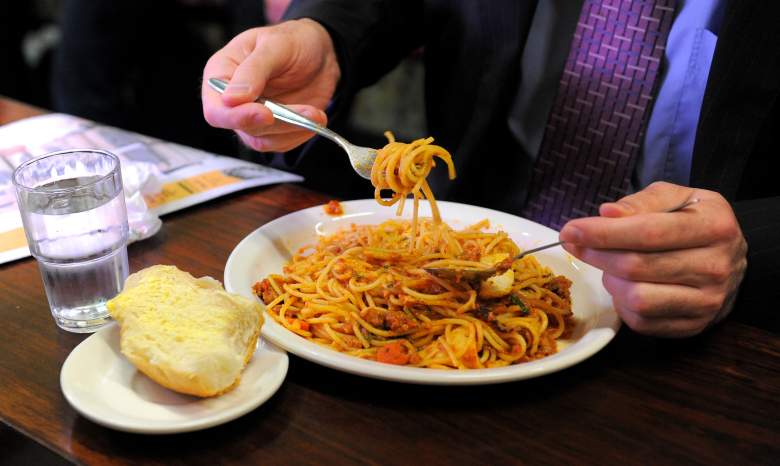
For years, conventional wisdom has held that the way to trimming the waistline is to cut down on carbs.
A recent study, however, is offering evidence that the long-standing demonization of carbohydrates may have been ill-advised.
A High-Carb Diet Slowed the Aging Process
According to Science Daily, a recent study from the University of Sydney indicates that eating more carbs, not less, could not only assist people in aging better, but could even slow the aging process by turning back the biological clock.
The study focused on adults aged 65 to 75, dividing them into four different groups, each of which was put on a distinct diet for a four-week period.
The study found that those who followed one particular diet, described as the “omnivorous high-carbohydrate diet” — in which 14 per cent of daily calories came from protein, 28 to 29 per cent from fat and 53 per cent from carbohydrates — demonstrated the most significant improvement in markers that researchers used to estimate the subjects’ biological age. (Biological age is defined by researchers as “an estimate of how old the body appears based on its health and physiological condition, rather than the number of years a person has been alive.”)
Subjects in the study who stuck to that diet for the four weeks, on average, appeared to be three-and-a-half years “younger” than at the start of the study.
“People fear carbs, but we need to reframe them,” Emma Bardwell, a nutritionist and author of “The Fibre Effect,” told The Telegraph. “Quality carbs give us fiber and a wide range of micronutrients and plant compounds. They’re vital to help us age well.”
It Depends on the Carbs

However, Bardwell cautioned that the results are heavily dependent on the type of carbs people eat.
“When many people think of carbs, they conflate them with junk food — pizza, croissants and cakes,” Bardwell explained. “We’ve been far too quick to lump them all together. There’s a world of difference between a bowl of chickpeas and a packet of biscuits.”
In the study, participants who undertook the “omnivorous high-carbohydrate diet” ate minimally processed food; as a result, their intake of carbohydrates came from fruits, vegetables, legumes (including beans and lentils) and wholegrains, “such as oats, barley, wholegrain bread, brown rice and quinoa,” Bardwell said, noting those are the carbs that people should focus on in order to slow the march of Father Time.
As Bardwell explained, refined carbs — a category that includes pasta, rice and white bread — have been stripped of most of their fiber and nutrients. As a result, this particular iteration of carbohydrate tends to spike blood sugar.
“With minimally processed foods, most of the natural structure is left intact, which means the body has to work much harder to break them down,” she said. “They release their energy more slowly and don’t elevate your blood sugar as sharply.”
Look for Fiber-Rich Carbs

Fiber content in carbs is also key. “One of the biggest advantages of quality carbs is their fiber content,” added Bardwell. “Fiber not only makes meals more satisfying, but also supports gut health and helps regulate cholesterol and blood glucose, which are particularly important over the age of 50.”
For those worried that a high-carb diet will lead to weight gain, Bardwell insisted that the opposite is true — but only if one sticks to “good” carbs while avoiding the refined “bad” ones.
“Less processed, fiber-rich carbs are more filling, helping us feel satisfied for longer and making it easier to manage our appetite,” she explained. That, in fact, is backed up in the University of Sydney study, which found that nearly all the participants on the high-carb diet lost weight, even though that was not the goal of the study.
In fact, Bardwell suggests that eschewing refined carbs for the unprocessed variety will yield a wealth of health benefits across the board.
“If you swap refined carbs, which are high in fat, sugar and salt, for quality ones, you’ll notice a difference very quickly, particularly in your energy levels,” saiid Bardwell. “This is a way of eating for life rather than for a short period of time.”















Study Finds the Secret to Slowing the Aging Process: Eating More Carbs