


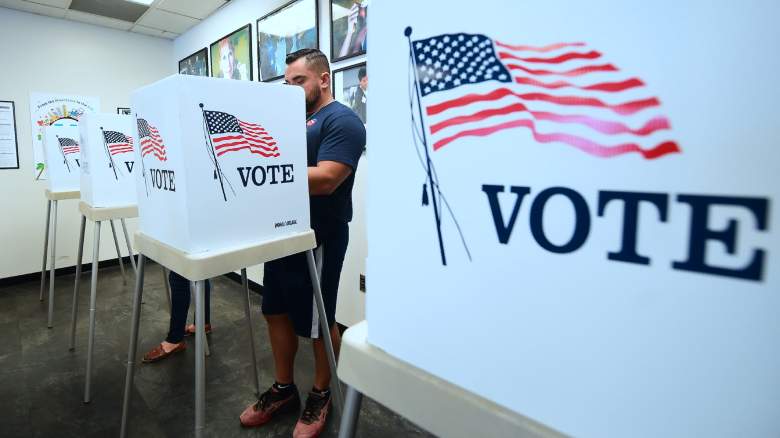
Imagine Al Gore being sworn in as America’s 43rd president in January 2001, not George W. Bush — or Hillary Clinton inaugurated in 2017 instead of Donald Trump.
Neither scenario is far-fetched, given that both Gore and Clinton received more total votes than their Republican rivals (about 500,000 and 2.9 million, respectively) only to lose both elections due to America’s electoral college, a system in which states’ electoral votes outweigh the popular vote.
Is the End of the Electoral College in Sight?
In recent years, an increasing number of Democrat lawmakers have taken aim at the electoral college.
“The electoral college, this convoluted, antiquated, obsolete architecture, is dangerous,” said Maryland Congressman Jamie Raskin (D) in an address to the Harvard Kennnedy School, while New York Congresswoman Alexandia Ocasio-Cortez (D) has declared, “It’s bogus, it’s a scam.”
Now, a report in the Washington Post indicates that the recent Democrat sweep in the midterm elections could pave the way to abolish the electoral college once and for all.
What Is the Electoral College?
The U.S. Electoral College was established in 1787 during the Constitutional Convention, intended to give states fair representation in presidential elections. Each state is assigned a specific number of electoral votes, comprised of two electoral votes (for each state’s two senators), in addition to a variable number of electoral votes determined by the number of members each state has in the House of Representatives (which in turn is based on population, determined via census data collected every 10 years).
As a result, the number of electoral votes varies significantly from state to state; California, for example, holds 54 electoral votes, while Texas has 40. On the other end of the spectrum, states such as Wyoming and both Dakotas have just three (Washington D.C. was granted three electoral votes under the 23rd amendment).
When all the states are combined, the nationwide total is 538 electoral votes, meaning a presidential candidate requires a majority of 270 to be declared the winner. Because certain states predictably trend Republican and others Democrat, those electoral votes are seen as a given; instead, presidential candidates must focus on winning the half-dozen or so “swing states” where voters are divided enough to go in either direction.
Pros and Cons
For those seeking to eradicate the electoral college, the rationale is simple: whoever earns the most votes nationwide should be president.
“There is no other election in this country where the person who loses can win the election, where the person who gets the most votes doesn’t actually win,” Wisconsin state Sen. Kelda Roys (D) told the Washington Post. “And it’s fundamentally unfair and anti-democratic, small-d democratic.”
However, those who continue to support the electoral college believe it preserves the influence of less populated states, preventing a candidate from focusing efforts on the most populous areas.
As the America First Policy Institute (described by PBS News as “a pro-Trump think tank”) wrote, getting rid of the electoral college “disenfranchises voters in member states if enacted, violates the United States Constitution, and undermines America’s Founders’ intent.”
Two Ways to End the Electoral College
While movements to abolish the electoral college have been underway for decades, actually achieving that is a complicated undertaking.
There are two ways in which the electoral college can be abolished, the first of which is amending the U.S. Constitution. That would require a joint resolution passed by a two-thirds majority in both the House and the Senate, followed by ratification from three-quarters of U.S. states.
Another pathway is the National Popular Vote Interstate Compact (NPVIC), an agreement among several U.S. states and the District of Columbia to commit electors to vote for candidates who win the nationwide popular vote, even if that candidate loses the popular vote within their state.
However, there’s a catch; NPVIC is only effective if enough states ratify the compact to reach an electoral majority of 270 votes; as of November 2026, only 18 states and the District of Columbia have joined the compact, totalling just 222 votes.
Thanks to the results of the midterm elections, however, next year both Senate and Congress will boast a two-thirds Democrat majority — for the first time since 1959. Meanwhile, Democrats also won full control of enough state governments that those now-blue states could join the compact and surpass that 270-vote threshold. As a result, both the NPVIC and constitutional amendment options are now on the table.
A Game-Changing Majority
Ditching the electoral college could fundamentally reshape the way presidential candidates run their campaigns by forcing them to seek votes from the entire population, not a half-dozen swing states.
However, the Post also points out that even if efforts are undertaken to get rid of the electoral colleage, it will likely be an uphill battle; any attempts would certainly trigger a tsunami of lawsuits that, even if ultimately unsuccessful, could still prolong things for years by bogging down the process with litigation.
A Constitutional Amendment Is Already on the Table
Tennessee Congressman Steve Cohen (D) has been a longtime proponent of abolishing the electoral college, and in October 2026 introduced a constitutional amendment to do just that.
“This process distorts our elections, and by potentially handing the Presidency to the loser of the popular vote,” write Cohen.
“It is unfair and it is beyond time to have a truly popularly elected President and Vice President,” he continued, adding that “this anti-democratic and anachronistic institution permits ‘elector’ politicians to override the people’s choice as reflected in the popular vote.”
‘The Will of the People’
Cohen is far from alone in wanting to ditch the electoral college. “The national popular vote makes sense,” declared Pennsylvania Gov. Josh Shapiro (D) during a recent appearance on the “Pod Save America” podcast, notes the Post.
“To me, the most important thing is that the will of the people is heard and respected, and I think popular vote is a way to do that,” Shapiro added.
If efforts to get rid of the electoral college do gather steam — either via a Constitutional amendment or NPVIC — there will ultimately be one branch of government that will control the final decision.
“I think the Supreme Court will be interested,” Notre Dame law professor Dean Muller told PBS News.








Efforts to Axe Electoral College Escalate After Democrats’ Midterm Sweep