


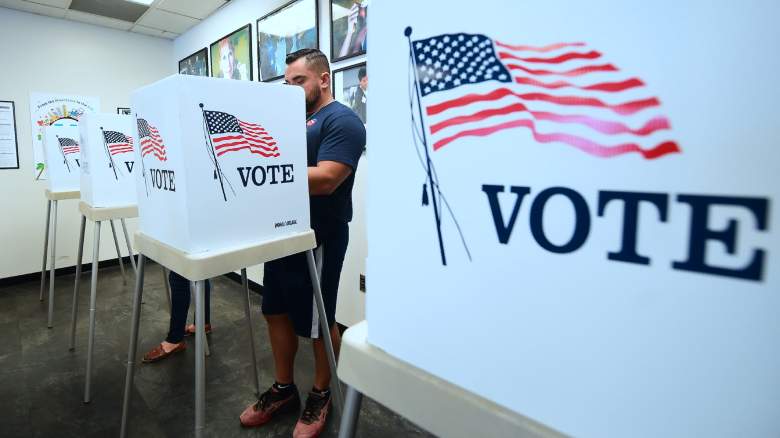
Imagine if, in January 2001, it was Al Gore who was sworn in as America’s 43rd president, not George W. Bush — or if Hillary Clinton had been inaugurated in 2017 instead of Donald Trump.
Neither scenario is far-fetched, given that both Gore and Clinton received more total votes than their Republican rivals (about 500,000 and 2.9 million, respectively) — only to lose both elections due to America’s electoral college, a system in which states’ electoral votes outweigh the popular vote.
Is the End of the Electoral College in Sight?
A report in the Washington Post indicates that the recent Democrat sweep in the midterm elections could pave the way for the eventual eradication of the electoral college.
According to the Post, a decades-long effort to abolish the electoral college is picking up steam now that Democrats control enough states to make that long-held ambition a reality.
The U.S. Electoral College was established in 1787 during the Constitutional Convention. Each state is assigned a number of electoral votes equal to that state’s total representation in Congress, with a presidential candidate requiring a majority of 270 votes to be declared the winner.
In the modern era, however, that system is widely regarded as antiquted and flawed.
“There is no other election in this country where the person who loses can win the election, where the person who gets the most votes doesn’t actually win,” Wisconsin state Sen. Kelda Roys (D) told the Washington Post. “And it’s fundamentally unfair and anti-democratic, small-d democratic.”
Not only have presidents won elections despite losing the popular vote, candidates are also forced to throw the bulk of their political capital at contentious “swing states” while virtually ignoring the vast majority of the populace.
“I don’t believe I’ve ever been relevant in the outcome of a presidential election,” Republican strategist Patrick Rosenstiel — based in Democrat-leaning Minnesota — told PBS News, insisting that scrapping the electoral college would fundamentally change the way presidential candidates approach campaigning. “National popular vote forces campaigns to focus on every persuadable voter in every precinct across the nation,” Rosensteil explained.
No Mean Feat
While movements to abolish the electoral college have been underway for decades, being able to actually achieve that has proven unfeasible — until now.
After the blue wave that swept through the midterm elections, not only will Democrats control both the House and the Senate, Democrats also won full control of enough state governments that ending the electoral college is now actually within the realm of possibility.
“Such a change would transform the country politically, reshaping who can mount viable presidential bids and how they run their campaigns,” notes the Post. “Instead of concentrating on half a dozen or so swing states, they would seek votes across the nation. Supporters say that would guarantee presidential candidates find broad backing; detractors say they would ignore smaller states and spend most of their time in the most populous states: California, Texas and Florida.”
However, the Post also points out that even if lawmakers at the state level do gather the necessary votes, getting rid of the electoral college will be an uphill battle; any efforts would undoubtedly trigger a tsunami of lawsuits that, even if ultimately unsuccessful, could still prolong things for years by bogging down the process with litigation.
‘The Will of the People’
Among those who believe the electoral college should be ditched is Pennsylvania Gov. Josh Shapiro (D). “The national popular vote makes sense,” Shapiro said while appearing on the “Pod Save America” podcast, notes the Post.
“To me, the most important thing is that the will of the people is heard and respected, and I think popular vote is a way to do that,” Shapiro added.
On the flip side of that argument, analysts for the America First Policy Institute — described by PBS News as “a pro-Trump think tank” — wrote that getting rid of the electoral college “disenfranchises voters in member states if enacted, violates the United States Constitution, and undermines America’s Founders’ intent.”
If efforts to get rid of the electoral college do gather steam, there will ultimately be one branch of government that will wind up making the final decision.
“I think the Supreme Court will be interested,” Notre Dame law professor Dean Muller told PBS News.





Efforts to Axe Electoral College Ramp Up After Democrats’ Midterm Sweep