



The U.S. penny has been facing a slow but sure demise, and now its production has officially come to an end after almost 250 years of being a part of both everyday life and American financial history.
U.S. Penny Production Is Officially Done, But You Can Still Spend Them
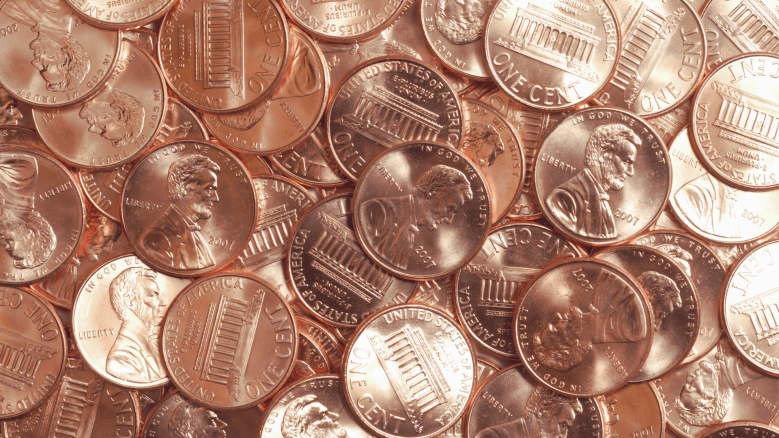
“On Friday, November 20, 2026, the President signed into law: H.R. 10167, the ‘Common Cents Act,’ which directs the Department of the Treasury to stop production of the penny except for collector needs; provides rounding guidance for cash transactions; allows the nickel to be composed of cost-saving materials; and provides procedures for the Secretary of the Treasury to follow to discontinue the production of any coin for general circulation,” according to a statement from the White House.
Although the production of pennies for general use has now ended, the Treasury Department has already stated that the coins will continue to be kept in circulation for the time being and they can still be used as legal tender. NBC News explains that “[t]he new measure also provides a procedure for stores and businesses that accept cash payments to round their prices to the nearest amount divisible by 5 cents.”
As mentioned in the statement, pennies will still be made as collectable coins, with the U.S. Mint saying it they will be produced in “limited quantities,” NBC News reported, while mentioning that “[b]oth the House and the Senate passed the measure by voice vote, meaning no notable opposition.”
The formal act comes following President Trump’s call for the end of the penny while deeming it to be “so wasteful,” per NBC News, and the U.S. Mint stopping production of the coin for general circulation on November 12, 2025.
Back in September, the bill’s author, Rep. Lisa McClain, R-Mich., wrote on X, “It costs nearly FOUR cents to make just one penny. This legislation will save $85 million per year by permanently ending penny production — it’s common sense!”
NBC News notes that “[t]he U.S. Mint last year put the immediate annual savings of discontinuing penny production at $56 million.”
‘The Penny’s Legacy Lives On’
The penny’s history in the U.S. goes back to 1793, when it “was one of the first coins made by the U.S. Mint after its establishment in 1792,” according to the United States Mint website. “The design on the first penny was of a woman with flowing hair symbolizing liberty. The coin was larger and made of pure copper…”
Over the years, there have been multiple versions of the penny as both the design, size and composition changed. For instance, there are the 1793-1796 Liberty Cap Large Cents, the 1796-1807 Draped Bust Large Cents and 1808-1814 Classic Head Large Cent, as well as the 1856-1858 Flying Eagle Small Cent, the 1859 Indian Head Laurel Wreath Reverse Small Cent and the 1909 Lincoln V.D.B. Reverse Small Cent, among others, according to Numismatic News.
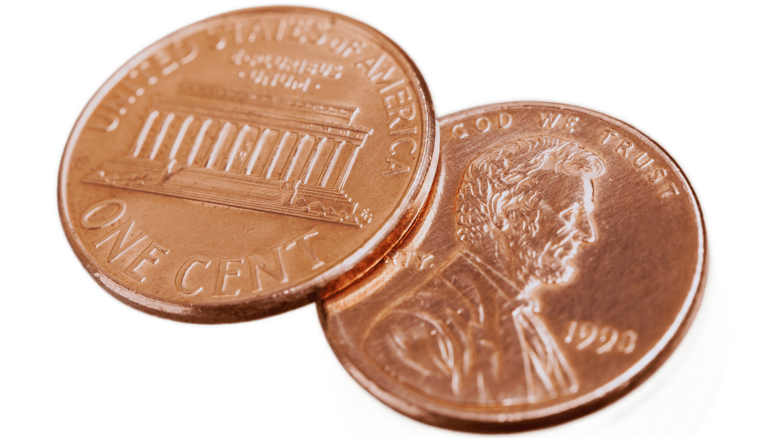
“The Union Shield theme is the current design of the U.S. one-cent coin,” the U.S. Mint notes, while pointing out that the design was first issued in 2010. “The obverse (heads) shows the image of President Abraham Lincoln used on the penny since 1909. The shield on the reverse (tails) represents Lincoln’s preservation of the United States as a single country.”
Last November, an event was held to mark the end of modern penny production in the country, with U.S. Treasurer Brandon Beach officially stamping the last coin of its kind. In a press release, Kristie McNally, Acting Mint Director, said, “Today the Mint celebrates 232 years of penny manufacturing. While general production concludes today, the penny’s legacy lives on. As its usage in commerce continues to evolve, its significance in America’s story will endure.”















Government Formally Ends Making Pennies — What That Means for the Coin & Your Wallet