


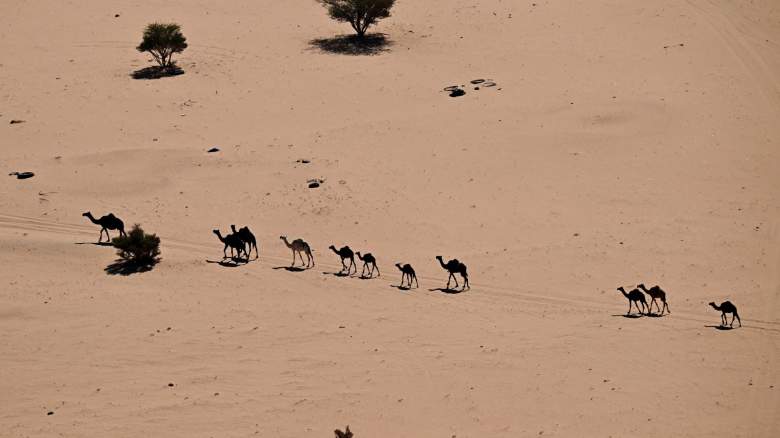
Researchers in Saudi Arabia have just uncovered several interesting finds during an excavation in the Empty Quarter. As the research continues, archaeologists are excited to learn more about the hunting habits and techniques of ancient civilizations in the area.
An Excavation in Saudi Arabia Revealed Interesting Hunting Tools

A new study published on Science.org suggests that ancient humans poisoned the tips of their hunting weapons.
The Smithsonian Magazine writes that Saudi Arabia wasn’t always the endless desert landscape we know today. Around 125,000 years ago, it contained a massive freshwater lake that provided a water source to plenty of local flora and fauna. In the Science.org study, researchers suggest that ancient humans hunted in the area.
According to the study, researchers found many fascinating things while excavating at Uruq Aljelibah, which means “sand dunes of a watering hole.” The area is in a spot known as the Empty Quarter, a large desolate desert region in southern Saudi Arabia. The Empty Quarter also stretches into Yemen, Oman, and the UAE.
The King Abdullah University of Science and Technology notes the excavation found “more than 500 fossil specimens of plants and animals.” The team also found 5,511 stone tools, which were mostly made of flint. While studying the tools, they noticed traces of toxic plants, which suggested the use of poison-tipped hunting weapons.
“Early humans were far more technologically sophisticated than the surviving archaeological record often suggests,” lead author and archaeologist Chris Clarkson told Gizmodo. “We’re only beginning to understand just how complex their lives were.”
The Discovery Is Truly Remarkable
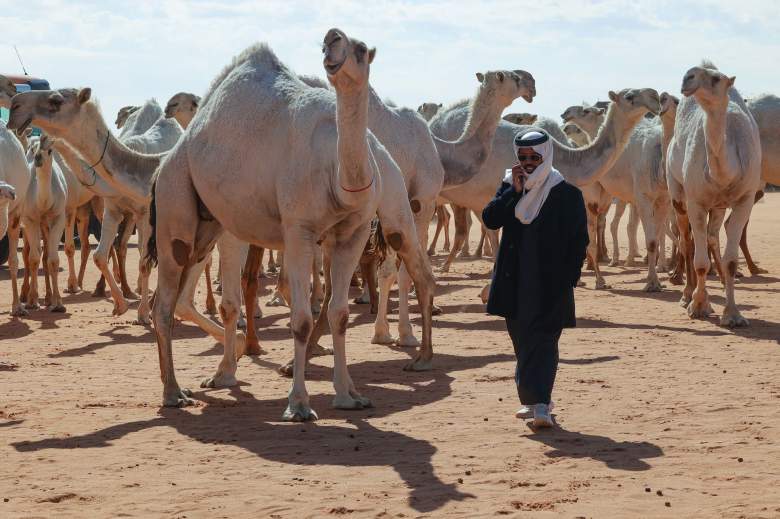
Through careful research, the scientists realized the stone tools were hafted, which means the ancient civilizations created weapons from multiple materials. In other words, the poison plants appear to have been added deliberately.
“Hafting is often inferred indirectly, based on size and shape of stone tools, for instance,” archaeologist Huw Groucutt told Haaretz. “What we have done is find direct evidence in the form of residues showing how the tools were hafted and used, at a scale that is rarely applied in archaeology, and certainly not at sites like this, open air sites in arid regions.”
The Smithsonian Magazine notes that it’s been exceedingly rare for archaeologists to find both stone tools and animal bones at the same sites anywhere on the Arabian Peninsula. This part of the Empty Quarter is truly remarkable. The archaeologists have uncovered ancient tools among remains of hippos, buffalos, ostriches, and other animals that inhabited the area long ago.















Researchers Make Ground-Breaking Discovery on Ancient Hunting Methods in Saudi Arabia