


Anyone who has struggled to finish a drink with a soggy paper straw knows they aren’t always convenient. But for years, we’ve put up with them, believing swapping plastic for paper was a small price to pay to help the environment.
Now, a new study from South Korea is raising an unexpected question: What if paper straws aren’t actually better for the planet?
According to Packaging Insights, the government-commissioned research found that conventional plastic straws had a smaller environmental footprint than paper alternatives across several major measures, including climate change, air pollution, and human toxicity.
The findings challenge the assumption that replacing plastic with paper automatically makes disposable products more environmentally friendly.
Are Paper Straws Worse for the Environment Than Plastic?
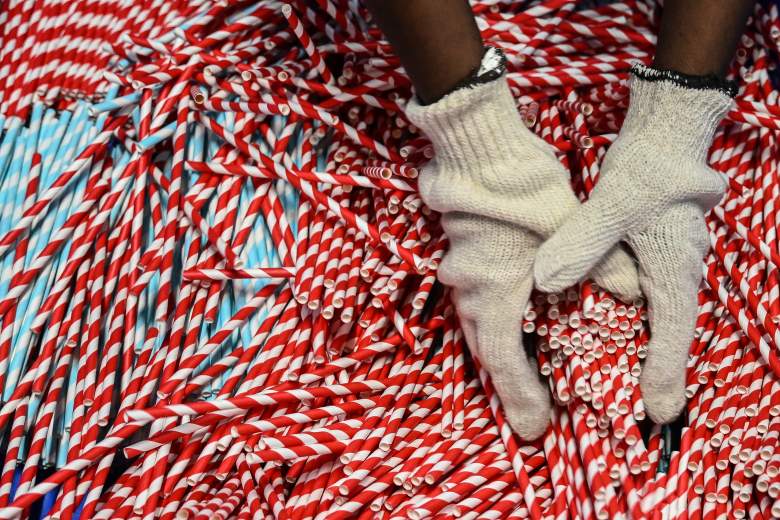
According to The Korea Herald, which reported the findings Thursday, October 22, researchers compared four types of drinking straws: conventional plastic, paper, biodegradable plastic, and bio-based polyethylene, commonly called bio-PE.
The study was commissioned by South Korea’s Ministry of Climate, Energy and Environment and disclosed Wednesday, October 21, by lawmaker Kim Wi-sang.
Researchers examined 16 environmental categories, considering the materials used to manufacture each straw, their production and their eventual disposal.
Traditional plastic straws had the lowest environmental impact in 10 categories, including climate change, particulate matter, and human toxicity, according to the New York Post.
Paper alternatives performed worse on several measures, despite their reputation as an environmentally friendly choice.
Study Finds Paper Straws Have Higher Environmental Impact
One of the most striking findings concerned the environmental impact of potentially cancer-causing substances, per Packaging Insights.
Paper straws registered a modeled carcinogenic impact 6.33 times higher than conventional plastic straws.
They also had about twice the environmental acidification impact, a measure linked to changes in soil and water chemistry. Bio-PE straws, made from renewable sources such as sugarcane, performed even worse on certain measures.
Their carcinogenic impact score was 16.18 times that of conventional plastic straws, while their acidification impact was nearly six times higher.
Importantly, these figures do not mean drinking through a paper straw increases someone’s cancer risk sixfold.
The study measured potential environmental impacts across manufacturing and disposal, not cancer diagnoses among consumers.
Why Are Paper Straws Difficult to Recycle?
The research also identified problems with disposing of used straws.
Although paper is often considered recyclable, drinking straws are small enough to slip through sorting equipment at recycling facilities.
Water-resistant coatings and adhesives can further complicate recycling.
The assessment used South Korean waste-management figures, assuming 73.6% of discarded straws were incinerated, and 26.4% ended up in landfills, according to the South China Morning Post.
Those assumptions matter because environmental outcomes vary with how waste is handled.
The findings also do not eliminate concerns about plastic litter or waterway pollution.
What Should Consumers Use Instead of Paper Straws?
Rather than recommending a simple return to plastic, researchers encouraged reducing the number of disposable straws used altogether.
Kim criticized South Korea’s approach to replacing plastic with alternative materials.
“Policy should focus on reducing the overall use of disposable products,” he said, according to the Straits Times.
The researchers recommended that restaurants and cafes provide disposable straws only when customers request them.
A government survey of 1,001 South Korean residents found that 87.5% preferred plastic straws, while 54.4% supported providing straws upon request.
For consumers, the findings suggest that choosing a different disposable material is not necessarily the best environmental solution.
Using fewer single-use products may be more effective than simply replacing one type of straw with another.














Paper Straws May Be Worse Than Plastic, New Study Finds