


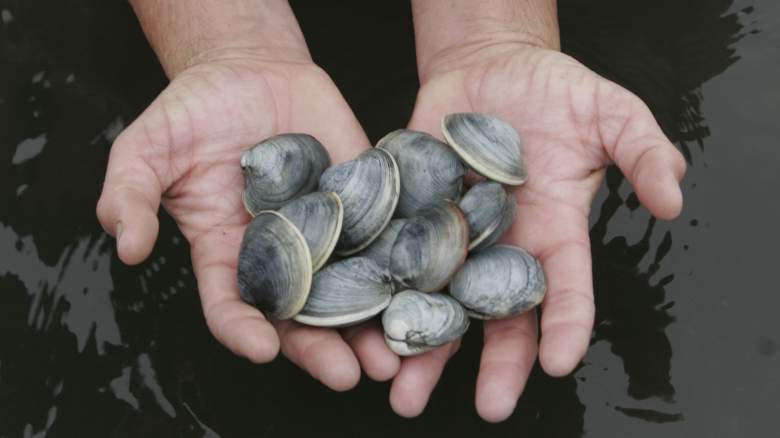
A team of eco-conscious volunteers in Connecticut have been painstakingly attaching thousands of tiny seeds to clam shells, eager to release them along the Long Island Sound in New York and Connecticut. The goal? Restoring underwater eelgrass habitats that are vital for the health of the water.
That’s according to Popular Science, which reported on a regional environmental group, Save the Sound, that has spent October organizing volunteers to glue 25,000 eelgrass seeds to the outside of 2,200 clams, which will be released at an “eelgrass restoration site” located near Great Captains Island in Greenich, Connecticut.
Why Is Eelgrass So Important to the Environment?
Save the Sound says eelgrass is a big deal in the ecosystem, providing “foraging areas and shelter for young fish and invertebrates” as well as diminishing coastal erosion, filtering water, releasing oxygen, and more. Since the 1930s, eelgrass meadows in and around Long Island Sound have decreased by more than 90 percent, per Popular Science.
One of Save the Sound’s experts and advocates, Bill Lucey, told the outlet that they’ve had many failed attempts at restoring the eelgrass, but have high hopes for their latest strategy. In 2025, they In 2025, they followed in the footsteps of Robert Vasiluth, the founder of Submerged Aquatic Vegetation EngineersEnvironmental (SAVE), who came up with a process of turning clams into underwater gardeners.
The idea is to “glue” eelgrass seeds to the clams’ shells, release the clams into the water, where they naturally bury into the sediment. If the seeds travel with them to the bottom, it’s like planting eelgrass underwater in the sea floor. After their initial attempts, Save the Sound used a drone to get images of what’s happening and discovered that the “eelgrass meadow coverage had increased by 178 percent,” according to Popular Science.
Although very promising, Lucey told the outlet, “It needs to survive for three years before we can really trumpet our horns and say it’s working, but the actual method of putting clams out and seeds attached to them really worked. The generation of the plants was incredible.”
Anyone Can Volunteer to Help Environmental Group Save the Sound Glue Eelgrass Seeds to Clams
High school students who belong to their school’s environmental club have been among the volunteers pitching in, using wet rice paper as glue, which will eventually dissolve underwater. The group is hosting eelgrass seed gluing events in October and November; watch their events page for new dates. They’ll do another evaluation in the spring and summer to see if the fall “planting” of more clams has the same success as the last batch.
Local supporters have been fascinated and impressed by the group’s social media updates, including one who recently wrote, “As odd an exercise as this may seem, it isn’t just one of those virtue-signaling (and ultimately low-value) community efforts. It has a genuine positive impact on the health of the Sound, its fisheries, and the edge habitat that supports the species we need (and love) above and below the water. Kudos to the volunteers/difference-makers.”












Volunteers in Connecticut Are Gluing Seeds to Clam Shells For a Fascinating Reason