


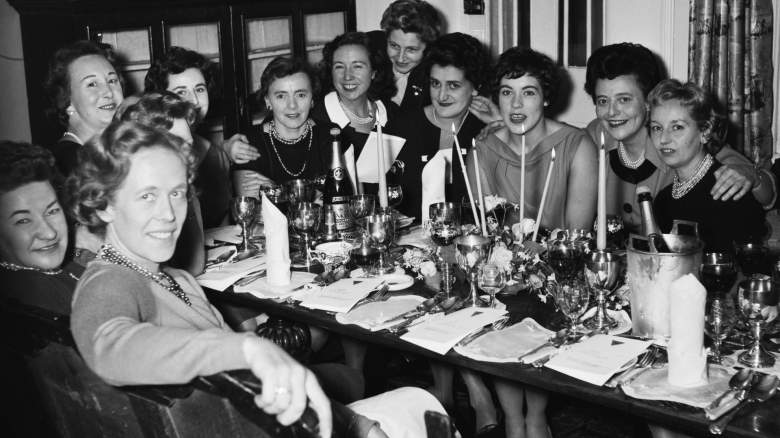
Who’s coming to dinner? Practically no one. Traditional dinner parties, which used to be commonplace in homes across America, have rapidly declined in the last three decades.
On November 11, 2026, USA Today reported while people may still want to get together for a meal, the way that looks has changed significantly in recent years, putting less responsibility on one host or even one location. Potlucks, afternoon “drop-ins” or a drink on the deck are far more likely these days than full dinner parties — but many people never invited others over for a meal, snack or beverage.
Dinner Parties Are One of Many Rapidly Declining Forms of Social Connection
USA Today cited data from multiple studies regarding Americans’ changing social habits, analyzed this fall by Derek Thompson, bestselling author and longtime reporter for The Atlantic.
“We’re witnessing the death of hosting in America,” he led his report, noting that “the share of adults who say they regularly have friends over has declined 70 percent since 1975.”
Between 1975 and 1999, according to the DDB Needham Life Style survey, the share of Americans who threw or attended dinner parties once a month declined by half, while the number of people who reported they never entertained people in their homes tripled.

Data For Progress then dug deeper to see how those numbers have shifted since 1999, surveying 1,098 U.S. adults on how many times they “engaged in various specific social activities in the past 12 months.”
The findings were staggering: Data For Progress found “significant, double-digit declines in Americans’ participation in key social activities from 1995 to 2026.” For instance, in 1995, 88 percent of people said they hosted someone in their home at least once in the previous 12 months. In 2026, that number has dropped to 67 percent.
But even going out to eat with friends or family has declined. In 1995, 87 percent of Americans reported having gone out to breakfast at least once in the past 12 months, but in 2026, that had dwindled to 74 percent. How about going on a picnic? In 1995, 58 percent had done that in the past year, while only 39 percent had packed a picnic in 2026.
What Activities Have Increased in 2026?
While we may not be hosting dinner parties or meeting up for picnics much anymore, there are a small handful of activities that have been on the rise; unsurprisingly, most are related to technology. In 1995, 42 percent of Americans had played a video game at home within the past 12 months. By 2026, that number had jumped to 64 percent.
The most jaw-dropping figure is regarding accessing the internet; in 1995, only eight percent of people had surfed the internet within the previous year (can you imagine!?). By 2026, that number had skyrocketed to 98 percent.
Though no one knows for certain what the reason is for Americans’ disinterest in extending invitations to come on over, along with the decline in plenty of other social activities, Thompson theorized that it’s a combination of data that shows parents are spending far more time with their kids, there are more solo entertainment options at home (from streaming platforms to video game consoles), and people’s social circles are actually shrinking.
Thompson’s report ended with this data-driven gut punch: “We have built a world in which being alone has never been easier, more comfortable, or more fun. And then we wonder why everybody stopped coming over.”















Dinner Parties Are Dying in America, New Data Shows