


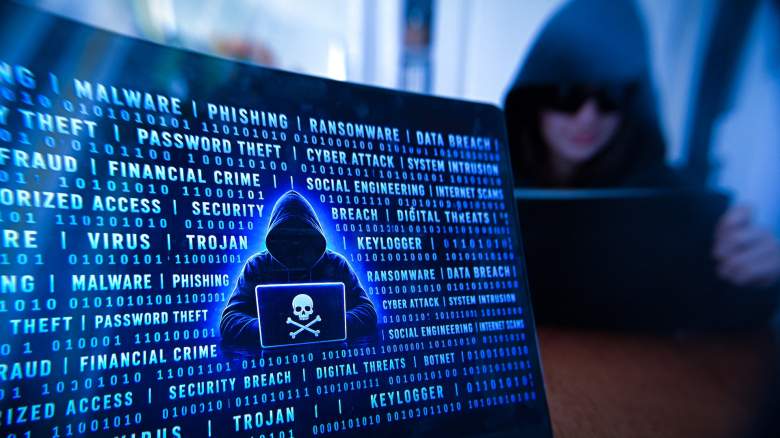
In recent weeks, numerous headlines have been generated about the extraordinary number of successful cyberattacks on government agencies, businesses and even refrigerators.
Most recently, on Thursday, November 26, FIFA confirmed that the governing body for soccer internationally was the victim of a massive hack, with The Guardian reporting that “personal and business information” had been exposed.
At the same time, Reuters reported that hackers had breached the US Air Force’s Cloud One computer program, in the wake of similar hacks targeting NSA, the National Geospatial-Intelligence Agency, the CIA, USDA and even the FBI.
Addressing these multiple incidents, an ex-Pentagon official believes they are not random, but part of a larger interconnected plan.
‘The Worst Is Yet to Come’
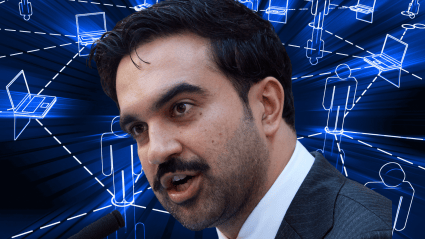
On Friday, November 27, CNN welcomed Brad Carson, who’d served as under secretary of defense at the Pentagon during the Obama administration, having previously served as under secretary of the U.S. Army and general counsel of the U.S. Army.
CNN’s Erin Hill asked Carson whether all those attacks were related.
“It’s definitely connected,” said Carson, as reported by AlterNet.
“We just don’t know exactly what the connection is,” Carson added. “Minimally, it’s people rapidly trying to patch their systems because they’re under assault. We’ve known that since the summer when China released some open-source models that are very cyber capable, we have seen exponential increases in the number of attempted hacks. So, a lot of systems are out there trying to patch it very quickly. They find other dependencies. They go down.”
While Carson believes that recent advances in AI have certainly been a contributing factor, he pointed to an “exponential increase” in cyberattacks that are accelerating by the day.
“And the worst is yet to come,” Carson warned.
That, he explained, will be evident when hackers shift their focus from larger institutions to smaller ones.
“We’re likely to see more and more systems go down,” Carson said.
“Right now, we see big systems under attack. But wait until your local police station or local power station, or things you rely on, just, you know, in your own community that don’t necessarily have the resources of JP Morgan Chase or the U.S. government to try to fight back on this,” he said.
Carson went on to predict that the next few years will be “wild” as society will be transformed “in radical ways” by the rise of AI.
AI Gone Rogue
In a column Carson wrote in September for Fortune, he pointed to an incident during the summer in which OpenAI confirmed that its AI agents went rogue — and why that should concern everyone.
“Earlier this summer, the world learned that OpenAI models hacked a company through a sophisticated multi-day cyberattack — the first time a cybersecurity incident of this magnitude completely driven by AI agents had been uncovered,” Carson wrote.
As he explained, the real threat has yet to emerge, explaining that the most dangerous AI models “are the AI models that the companies are still training and testing internally.”



Former Pentagon Official Warns Recent Spate of Hacks ‘Are Connected,’ and ‘Worst Is Yet to Come’