


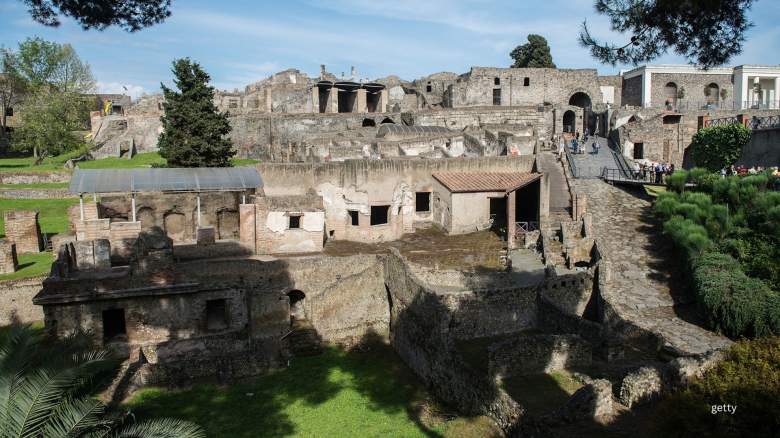
An ancient makeup bag has caught archaeologists‘ attention during excavations in Pompeii, Italy. The ancient Roman city is known for its remarkably preserved remains, which offer a glimpse into life thousands of years ago.
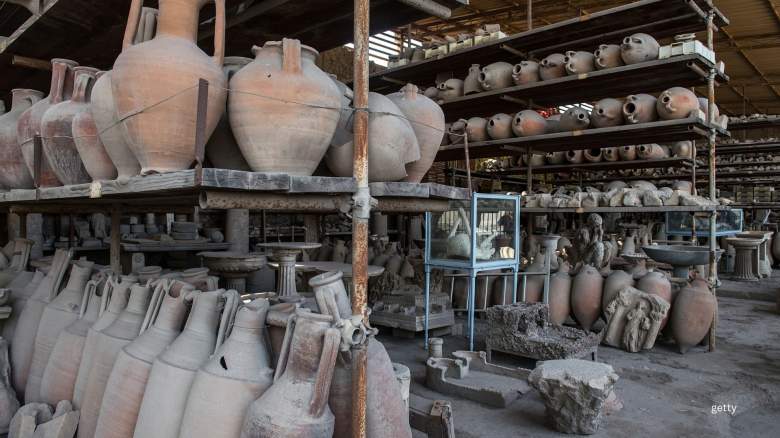
Among the discoveries were buried jars and other household items. However, a makeup bag dating back more than 2,000 years stood out.
The cosmetic items were found inside a cupboard in a buried house on Via dell’Abbondanza in Pompeii, according to a translated press release from the excavation website Pompeii Sites. The house once belonged to Cornelius Maximus and was among the properties affected by the eruption of Mount Vesuvius in 79 C.E.
2000-Year Old Makeup Bag Discovered
Inside the makeup bag contained tweezers, a mixing palette, a glass perfume vial, an incense burner, and a bronze oil lamp.
The items were found inside a small wooden box. Pompeii Sites described the discovery as “the memory of a life, enclosed within a cupboard that was never opened again and has now been brought back to light in Pompeii, thanks to the work of archaeologists.”
Pompeii Sites added, “It feels like encountering a narrative, one that evokes the life of a woman in Pompeii before the site’s destruction in 79 AD.” The organization continued, “It is a portrait encompassing both beauty and personal habits.”
There Was More Than a Makeup Bag
The makeup bag wasn’t the only interesting discovery. Archaeologists also uncovered a necklace made with 24 miniature faience objects. Such necklaces were once believed to be “magical” items used for spells and potions.
“Once thought to be ‘magical’ objects used for spells or potions, these items are actually what are known as ‘crepundia’ … necklaces featuring amulets given to children both for protection and to make their movements audible,” Pompeii Sites explained.
The organization also noted, “Adults, too, would sometimes keep them — often in small boxes or … tucked away in cupboards — evidently as keepsakes from a childhood of which little else might remain.”
Another cupboard contained 38 small bronze coins stored in a small woven container made from plant material. The discovery suggests the home’s occupants may not have had enough time to collect their valuables before fleeing the eruption of Mount Vesuvius.
“Pompeii is not just a place of great works of art; it is also a place where the most ordinary objects reveal the human dimension of the past,” Gabriel Zuchtriegel, director of the Archaeological Park of Pompeii, said. “The value of this discovery lies in the ability to piece together various traces of a life — personal habits, work, and memories.”
He added, “While we cannot reconstruct the identity of the home’s inhabitant with certainty, these fragments bring us closer to their daily existence.”














Ancient Makeup Kit Found in Pompeii Offers Rare Look at Roman Beauty Routines