


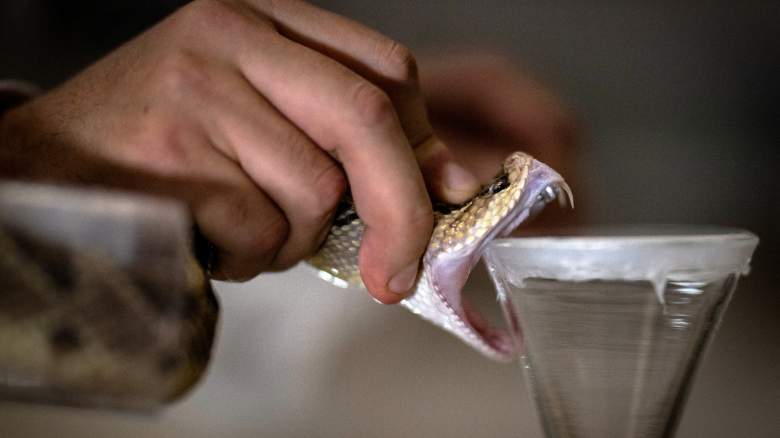
A family from Sarnia, Ontario, was visiting their cottage when what should have been a joyous and relaxing long weekend for Canadian Thanksgiving turned into a nightmare. On Sunday, October 11, at around 12:45 p.m., their 15-month-old son, Wells Gladwish, was bitten on the thumb by a rattlesnake while walking near a bonfire, CBC reports.
Toddler Survives Rattlesnake Bite in Remote Area


The remote location in Cape Chin North on the Bruce Peninsula, and the boy’s size, made getting help quickly vital. The child’s father, Matt Huggett, revealed to CBC that his son saw the rattlesnake and tried to pick it up. Within minutes his hand had turned white. “We knew right away we were in a pretty bad situation,” Huggett said. “The nearest hospital was Lion’s Head, and we did everything we could to get him there as fast as possible.”
The family took Gladwish to Lion’s Head Hospital, where staff administered ten vials of antivenom, after an initial dose was given to check for an allergic reaction. The medical team then consulted with London Health Sciences Centre (LHSC), Victoria Hospital, and Huggett’s son was transferred in a three-hour ambulance ride. The hospital did not have a supply of antivenom in stock, but arranged for it to be sent from a hospital in Toronto, and it arrived under police escort.
18 Vials of Antivenom Administered to Save Toddler’s Life


While waiting to be transferred, Gladwish received another four vials of antivenom. The hospital reportedly had only 14 vials in its supply, but the toddler was later given two more double doses when he arrived at LHSC. The total number of antivenom vials administered was 18.
Pediatric critical care physician Dr. Rishi Ganesan was responsible for the toddler’s care when he reached LHSC. He has seen snake bites many times before. “I trained in India, many, many years back, and I have managed snakebites of every kind: cobra, viper, krait,” Ganesan said. “Some of those things kicked in from the back of my mind, and I felt very comfortable.”
Ganesan also explained how antivenom works, with CBC reporting that “children do not necessarily need less antivenom than adults. Treatment targets the amount of venom, rather than the patient’s size, and children can become seriously ill more quickly because the venom has a greater impact relative to their body size.”
“This was a remarkable experience,” Huggett told CBC. “You had so many people come together and contribute in many small ways to make sure that he got the best care that he deserved.” He revealed that his son was recovering well and using his thumb. “We don’t want to say we’re 100 percent out of the woods yet. But he’s using it right now, he seems happy, and it seems to be looking better,” he shared with the outlet.
The Snake Species That Bit the Toddler Is Threatened
A family member’s quick thinking resulted in a photograph of the snake, which helped with identification. It is reported to have been an eastern massasauga rattlesnake. “In Ontario, Eastern Massasauga is active from approximately mid-May to late October and hibernates for the rest of the year,” the Government of Canada reports.
In an Assessment summary from May 2025, the Government of Canada reports that the snake species is threatended. “All subpopulations are declining because of continued degradation and loss of habitat, increasing mortality on roads, and ongoing persecution of this venomous species. Human activity in the species’ limited remaining range is intensifying, and the overall impact of current and future threats may lead to declines of greater than 30 percent over the species’ next 25 years,” they write.











Toddler Receives 18 Shots of Antivenom After Bite From Rattlesnake: ‘We Were in a Pretty Bad Situation’