


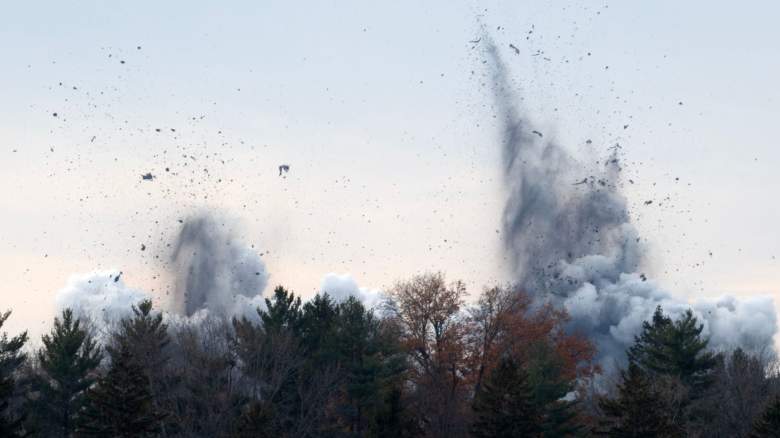
Federal officials are reporting an encouraging early result after the U.S. Army detonated nearly five tons of unstable explosives at an Iowa ammunition plant, even as thick smoke spread across the surrounding area.
The two controlled explosions took place at approximately 9 a.m. local time Wednesday, Nov. 25, at the Iowa Army Ammunition Plant in Middletown. The operation destroyed 68 drums containing degraded lead azide, a highly sensitive explosive that officials feared could detonate unexpectedly if left in storage.
A Statement Was Released
Hours after the blasts, the Environmental Protection Agency reported that its real-time air monitors had detected no airborne lead in the surrounding region.
“Real-time air monitors are reporting ZERO detection of airborne lead,” the agency said in a statement. “EPA monitors never stopped collecting data throughout the event.”
The Army also described the operation as a success. Maj. Gen. Eric Shirley, commanding general of the U.S. Army Sustainment Command, said the results had surpassed expectations, according to AMC News.
“Every indication is that all of the munitions that were employed absolutely reduced the lead azide threat,” he said in a video statement.
Robert Cekada, director of the Bureau of Alcohol, Tobacco, Firearms and Explosives, explained that the explosives were detonated using a method designed to direct the force downward rather than spread potentially hazardous material into the air.
The blast drove the explosion into the ground “and followed a blast channel that was designed to go down the right path to minimize any sort of dispersion of lead into the atmosphere,” he said.
Footage from the operation showed two enormous clouds of black smoke rising above the facility before spreading and gradually dissipating.
The detonation had raised concerns among nearby residents and environmental advocates, who worried that lead particles could contaminate the air, soil and waterways. The Army said the aging stockpile had become increasingly unstable as the material deteriorated and crystallized, making even minor friction or movement potentially dangerous.
The decision to proceed followed disputes over the safest way to dispose of the explosives. Environmental groups raised concerns about the potential consequences, while the Army maintained that moving or treating the material could trigger an accidental explosion.
Some Residents Left Their Home
Some residents chose to leave their homes ahead of the operation. Lucy Giehl, 64, who lives about four miles from the plant, traveled with her husband and their two dogs to her sister’s home in Marion, Iowa. She also brought N95 masks and disposable gloves in case of possible exposure to lead dust.
Although early forecasts suggested the wind could carry the plume toward her home, it ultimately blew in the opposite direction. Giehl said she remains worried about the long-term effects on wildlife and nearby communities.
“It was never just ourselves that we were concerned about, although it was pretty scary to be as close,” she tells PEOPLE. “And the frustration of the fact that something wasn’t done much sooner to avoid this.”
Although the initial air-monitoring results were encouraging, officials have emphasized that testing is not over. The EPA said it had collected more than 1,200 samples of air, soil, dust and water before the explosion and would continue monitoring after the operation.
The agency has also deployed hundreds of employees and contractors to the region to collect additional samples and determine whether any cleanup is needed.
For now, the zero airborne-lead readings offer an early indication that the controlled blast limited one of the major concerns surrounding the operation. Officials will continue evaluating the environmental results as more testing becomes available.















Officials Reveal Air Quality Results After Massive Iowa Explosives Detonation