


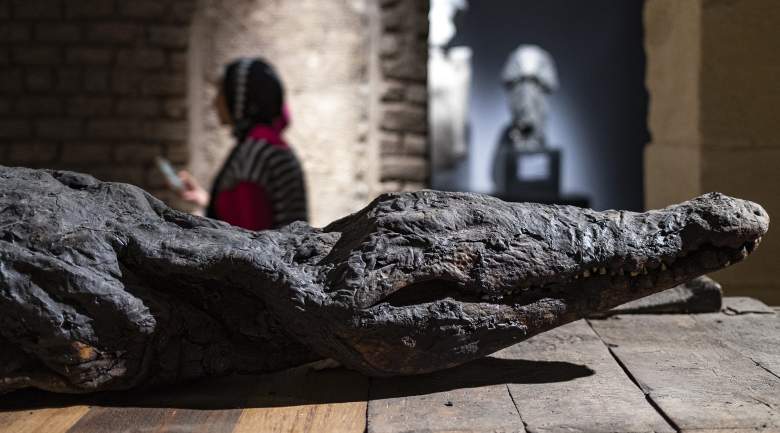
A new study is unearthing ancient secrets about crocodile mummies and the techniques used to preserve them in ancient Egypt.
The research was published by Scientific Reports.
The authors noted that animal mummification was “central to ancient Egyptian religious practices during the second half of the 1st millennium BC,” and “broadly followed similar principles to human mummification.” According to National Geographic, it’s not uncommon to find crocodile mummies in Egyptian tombs. In fact, in 2025, five skeletons and five heads were discovered.
But Why Crocodiles?
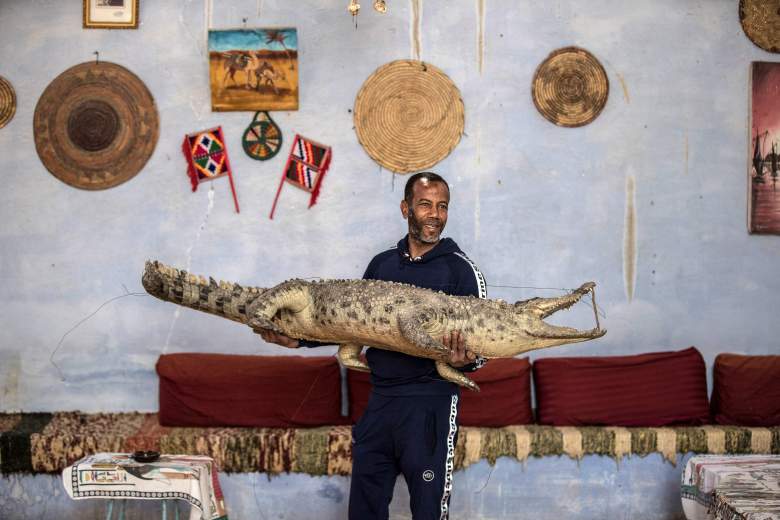
According to the authors, the ancient humans associated crocodiles with the god Sobek so they mummified the creatures “in great numbers.”
“Some crocodiles were believed to be living manifestations of the god (sacred mummies), and mummified after their natural death, while others served as votive offerings with large numbers deposited in dedicated burial complexes,” they wrote.
According to National Geographic, the ancient Egyptians considered crocodiles to be “intermediaries between humans and Sobek, the crocodile-headed god of water and fertility—vital attributes in a desert land where all life came from the Nile.” The ancient creatures were very large; the crocs unearthed in 2025 “ranged in size from around six feet to 11.5 feet,” National Geographic reported.
The crocodiles were wrapped in linen as offerings. The objects “often took the form of the god being offered to—in this case, the croc-headed god Sobek,” added National Geographic.
Who was the god Sobek? “Life in ancient Egypt focused on the vigorous inundation of the Nile and the land fertility it brings. So, it is not surprising to find these concepts manifested in Egyptian religion in the form of the crocodile god Sobek,” ARCE wrote. “Despite Sobek’s beginnings as a local deity, the god evolved to unparalleled prominence during the Middle Kingdom. His story during this period affected the politics of the time, demonstrated how ancient Egypt cultivated and blended deities, and marks a turning point in his role within the Egyptian pantheon.”
The Scientists Were Able to Figure Out the Ancient Embalming Recipe
According to the scientists, prior research on embalming recipes for crocodiles “is limited, but has revealed the use of resins, tars, waxes and bitumen. However, it remains unclear whether embalming recipes varied across mummy types, periods or sites.”
To investigate this, “we analysed seven crocodile mummies from the Late to the Graeco-Roman Periods using gas chromatography–mass spectrometry and correlating molecular profiles with radiocarbon dates and provenance. Our results show that the crocodiles were embalmed with different combinations of beeswax, pine (Pinaceae Pinus) resin or tar and cedar (Pinaceae Cedrus) tar,” the researchers found.
They explained how the findings have advanced scientific knowledge, writing, “This combined dataset highlights the continuity and transmission of embalming knowledge, and the existence of site-specific embalming traditions not documented before.”














Tests on Crocodile Mummies Reveal Ancient Secrets