


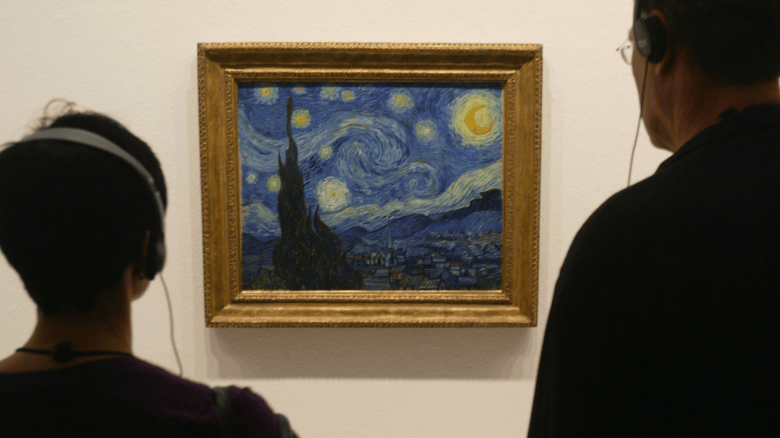
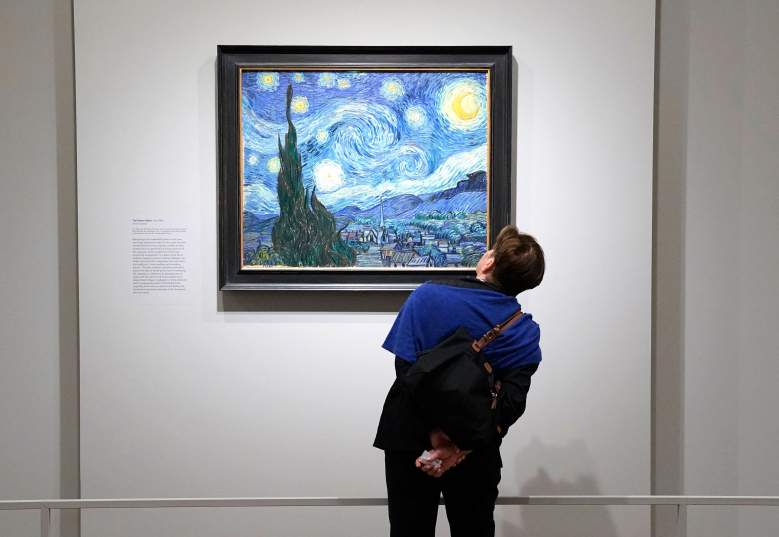
There’s no doubt that “The Starry Night” by Vincent van Gogh is one of the most famous pieces of art in the world. Yet, there are still plenty of things that we don’t know about the painting, including exactly when it was created.
Now, astronomers may change how we look at “Starry Night” as they “challenge” the dating of the masterpiece.
Van Gogh Could Have Been Looking at the Exact ‘Starry Night’ Sky


It has widely been accepted that the scene depicted in “Starry Night” was something that van Gogh had imagined. However, “scientific sleuthing now suggests The Starry Night may be based on a real dawn sky,” according to The Guardian. To be more specific, “[r]esearchers say the celestial bodies depicted in the famous painting match the sky the Dutch artist may have seen on about 22 July 1889, a month later than the usual date given for the work.”
If this newly suggested date is correct, then it would mean that the artist, who had been struggling with his mental health, had already admitted himself into the asylum in Saint-Rémy-de-Provence when he created the painting.
The piece is thought by others to have been made in June, due in part to letters from van Gogh to his brother Theo that were written that same month and mentioned “a new study of a starry sky,” The Guardian notes.
Beyond that, following what The Guardian described as “a mental breakdown in July,” it was believed that van Gogh was “unable to paint for weeks.” Despite this, the authors of the study published in the journal Scientific Reports bring up the fact that if van Gogh had painted the scene in July, then both the moon and stars in the piece — the Hyades star cluster — could have actually been seen by the artist “from his window at the asylum” while he was painting.
Not Everyone Is Convinced by the New Study
While this new theory is intriguing, Artforum pointed out that “The Van Gogh Museum in Amsterdam and experts are not convinced.” Indeed, the Guardian noted that Donald Olson, professor emeritus of physics and astronomy at Texas State University, “was also not convinced by the study because the positions of Venus and the Hyades cluster in the painting do not match their calculated position.”
“The authors’ assumed narrow field of view, essential for their theory that the stars of the Hyades fill most of the canvas, is inconsistent with the much wider field of view required to encompass Starry Night’s round hills and cliffs,” he explained.
As for the researchers of the newly published study, they mention that it wasn’t the positions of Venus and the Hyades cluster so much as the forms created by the celestial bodies, and suggested that they believe van Gogh may have used what he saw over the course of multiple days to paint what we see in “Starry Night.”














Astronomers ‘Challenge’ Date of Van Gogh’s ‘Starry Night’ by Connecting It to Asylum Stay