


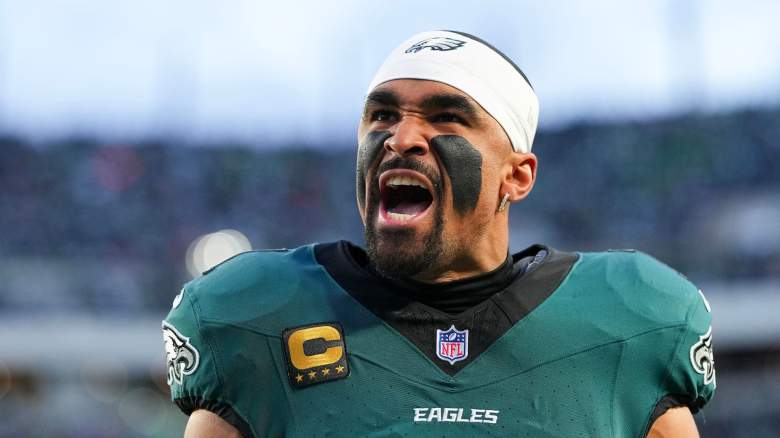
Philadelphia Eagles quarterback Jalen Hurts is expected to miss the remainder of the 2026 NFL season after doctors discovered multiple blood clots in his lungs.
Hurts has been diagnosed with deep vein thrombosis (DVT) and bilateral pulmonary emboli, according to a statement released October 19 by the Eagles and his agent, Nicole Lynn.
The 28-year-old quarterback is undergoing treatment with blood thinners and is expected to fully recover.
However, the treatment is expected to keep him off the field for at least three months, sources told NFL Network’s Ian Rapoport and ESPN’s Adam Schefter.
Hurts’ condition developed after doctors initially discovered a superficial blood clot in his left calf earlier this month.
The Eagles have since placed their starting quarterback on injured reserve.
What Is Jalen Hurts’ Deep Vein Thrombosis and Pulmonary Embolism Diagnosis?


Deep vein thrombosis occurs when a blood clot forms in a deep vein, commonly in the leg.
A pulmonary embolism occurs when a clot travels through the bloodstream and blocks an artery in the lungs.
Hurts was diagnosed with bilateral pulmonary emboli, meaning doctors discovered blood clots affecting both lungs.
According to Dr. Rushad Patell, director of clinical and translational research of benign hematology at Beth Israel Deaconess Medical Center and an assistant professor at Harvard Medical School, superficial blood clots can sometimes progress into more serious conditions.
Patell explained the risks in an email to USA TODAY Sports.
Superficial blood clots “can extend into the deep venous system, particularly when they are extensive (involve longer segments of the veins) or located close to where the superficial and deep veins connect,” Patell wrote.
“They can also occur alongside DVT, which carries a risk of pulmonary embolism, which is when a clot migrates to the lungs, a potentially life-threatening complication.”
Although superficial clots are generally less dangerous than DVT, their location and size can affect the risk of complications.
Patell explained that doctors evaluate each case individually when determining treatment.
“Some cases are relatively low risk and require only symptomatic treatment, while others warrant anticoagulation because of their extent, location, or potential for progression,” he said.
Anticoagulation involves medications commonly known as blood thinners that help prevent existing clots from growing and reduce the risk of new clots.
Eagles Reveal Timeline of Hurts’ Blood Clot Diagnosis
The Eagles first discovered Hurts’ condition after he underwent an ultrasound in London before Philadelphia’s October 4 game against the Jacksonville Jaguars.
The initial examination identified a superficial blood clot in his left calf.
According to the team’s October 15 statement, doctors determined that mobility was important and that Hurts could safely participate in the game.
Hurts played against Jacksonville despite the initial diagnosis.
However, a follow-up ultrasound on October 14 showed that the clot had moved.
Philadelphia subsequently ruled Hurts out of its Week 6 matchup against the Carolina Panthers.
Additional medical testing revealed the more serious diagnosis involving his deep veins and lungs.
The Eagles and Lynn released their updated statement on October 19, confirming the DVT and bilateral pulmonary emboli diagnoses.
The team also confirmed that Hurts had started treatment.
Why Blood Thinners Are Expected to Keep Hurts Out for Three Months
Hurts’ expected absence is tied to his treatment with anticoagulation medication.
Blood thinners reduce the blood’s ability to form clots, helping prevent additional complications while the body gradually breaks down existing clots.
However, anticoagulants also increase bleeding risk, which is especially important for athletes in contact sports like football.
Patell explained that decisions about whether an athlete can continue competing depend on several medical factors.
Those considerations include the patient’s symptoms, the clot’s location and characteristics, and whether anticoagulation is necessary.
Doctors may also repeat imaging to monitor changes and determine whether treatment needs adjustment.
According to Rapoport and Schefter, Hurts’ treatment is expected to last at least three months.

Eagles QB Jalen Hurts’ Season-Ending Blood Clot Diagnosis Explained After Alarming Update